
Source by Webflow: The next generation of website ops




Webflow unveiled its new product, Source, at Webflow Conf 2026 and is rebuilding the platform around code as the source of truth. Here's what's changing and what to do now.
Webflow unveiled Source at Webflow Conf 2026 in Boston on September 2. Source is a new platform where marketing teams and their AI agents launch, optimize, and scale digital experiences together, and it's only open today as a limited research preview.
Webflow is rebuilding its platform around code as the source of truth, which closes the gap between what LLMs can do with a site today, and how Webflow's designer canvas works.
Here is what Source actually does, what doesn't change, and what marketing teams should expect over the next few months.
What is Source by Webflow?
Source is a shared operating environment for marketing teams and their agents. It connects to your codebase and martech stack, and gives every person on the team a workspace built around their job and the outcomes they own.
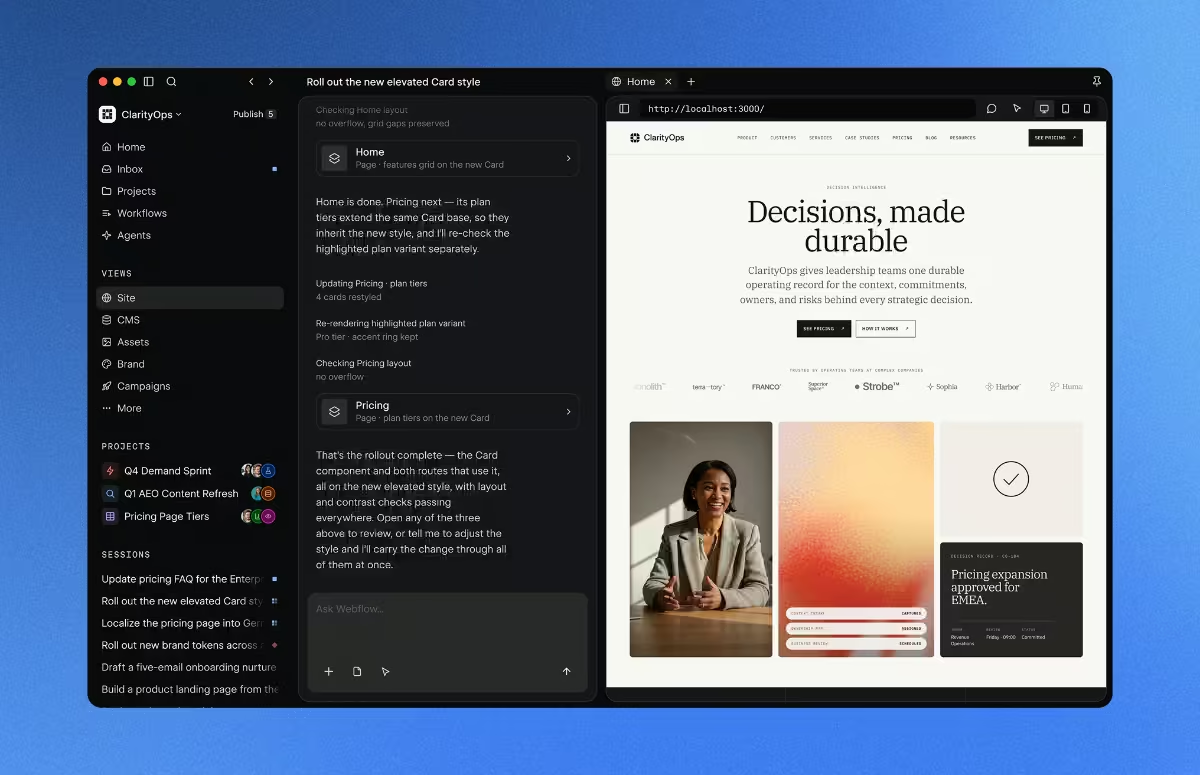
Agents get direct access to the code that ships, so they can take on larger and more complex changes. Visual editing sits on top of that same code, so a designer can take manual control for the last mile without leaving the system. And governance is present from day one, rather than bolted on (like most AI/vibe-coded sites today).
Webflow calls Source "composable by default." You can bring your own codebase, CMS, hosting, and marketing tools, or use more of Webflow's own stack. Either way you get the same workspaces, governance, and agent layer.
Why Webflow rebuilt on code
In August, Webflow's Chief Product Officer and VP of Engineering published an unusually candid post explaining the architectural problem. When you design in Webflow today, you are not manipulating your website's actual code, but an internal proprietary data structure that Webflow compiles into the HTML, CSS, and JavaScript browsers actually run. The canvas renders that internal format, and the code that ships is generated output you never touched.
Webflow's argument is that agents removed the reason for the abstraction. Code was never the enemy, it was just unavailable to anyone who could not write it. Agents can now read, write, and explain code well enough that hiding it costs more than it saves. So Webflow is making code the default, and adding the power of Webflow's visual canvas, and a new chat interface on top, built for both technical and non-technical marketers.
Over 30% of Webflow's enterprise customers are already running agents against production Webflow sites through MCP, and that figure has grown roughly 4x since January 2026.
Views: workspaces built around the job you own
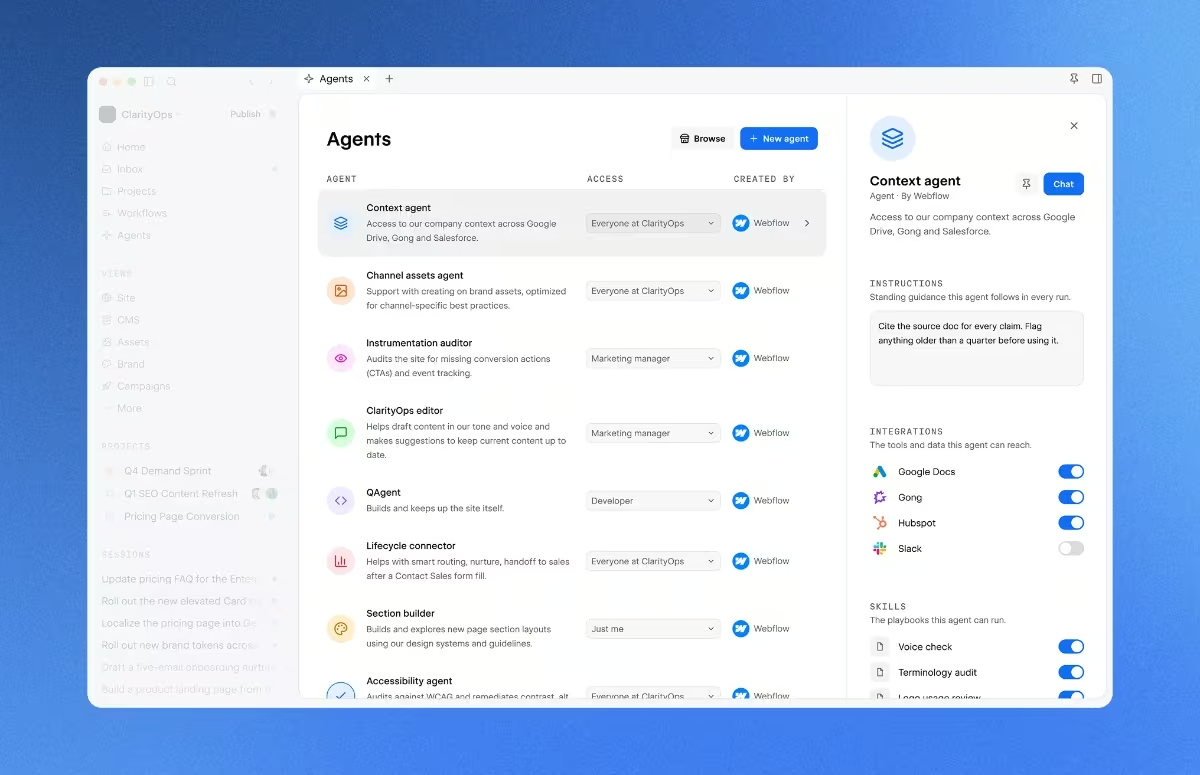
Views are the second half of the idea and the part that changes daily work. A View is a dedicated surface for a specific marketing job. Webflow ships default Views for visual site building, campaigns, content, and optimization, and teams can build custom Views around their own workflows, like a dashboard for the metrics they care about or a surface built around their content approval process.
Webflow has shown six so far:
How is Source different from a DIY agentic stack?
Plenty of teams have already stitched together their own version of this: an AI coding tool or IDE, a headless CMS, and a deployment layer. Webflow's diagnosis of why that fails is specific and (if you've tried it) familiar.
Every session starts from zero, cut off from what a teammate's session already knows, the work that came before, and how any of it performed. Everyone gets pushed through a prompt box even when a prompt box is the wrong tool for the job. And without governance, teams cannot enforce brand standards, permissions, or review paths as more people and agents get involved.
What about my existing Webflow site?
This is the question every marketing leader will ask first. The existing platform is not being retired. Webflow says they'll keep investing in it, including expanding its agentic capabilities, and points to MCP 2.0 and 2.1, native AEO agents, and AI Code Components as evidence.
On migrations, there's no date yet. When Source is ready for you, and if you choose to move, Webflow says it will provide a supported path (assuming any sort of "migration" is even necessary).
Also announced at Webflow Conf 2026
Source is the major keynote announcement, but there are a few other releases for the current product as well.
When will Source by Webflow be available?
Source is in limited research preview now. Webflow is enrolling select agency partners and customers in phases over the coming months. You can apply through the form at webflow.com/source. Pricing still hasn't been announced.
What does this mean for marketing teams?
Three things that should improve:
- Speed: Historically, a new landing page variant means a ticket, a queue, a developer who's mid-sprint on something else, then QA. With agents working on real code, timelines go from days to minutes.
- Governance: Normally that kind of speed costs you control. With Source, we're hoping to see better permissions, access controls, and activity/change logs so that you know who shipped what.
- Ease of use: Right now, changing anything meaningful on a Webflow site means learning Webflow, or asking someone who has. Source gives each person a surface built for their job instead of one tool everyone has to learn.
For the B2B teams we work with, these mean fewer bottlenecks, less dependence on whoever holds the keys, and more of the team able to move without anyone worrying about what breaks.
It's worth noting that this is all just announced, so time will tell what Source looks like when general availability comes around, but we're very excited about this direction from Webflow.
How Crew will help clients navigate Source
We build and maintain Webflow sites for B2B companies, and we already run agent workflows against production client sites with governance in place. As Source opens up, we'll be testing it with client sites and our own internal projects.
If you're a marketing leader and wondering what all this means for your site and your stack, let's chat.
What we know about Source today
What is Source by Webflow?
Source is a new Webflow platform where marketing teams and their AI agents launch, optimize, and scale digital experiences together. It connects to your codebase and martech stack and gives each marketer, designer, and developer a workspace shaped around their job, with agents working directly on the code that ships.
Is Source by Webflow available now?
Source is in a limited research preview as of September 2026. Webflow is enrolling select agency partners and customers in phases over the coming months. You can apply at webflow.com/source.
What happens to my existing Webflow site?
Nothing. Webflow says the existing platform is not going anywhere and that it will keep investing in it, including expanding its agentic capabilities. If you choose to migrate to Source once it is ready for you, Webflow says it will provide a supported path.
How is Source different from Cursor, Lovable, or other AI site builders?
Those tools generate a site quickly but assume a single developer working against a single repo with an engineering workflow of git, branches, and pull requests. Source is built for what happens after launch: a whole marketing team and multiple agents working on the same live site, with brand standards, permissions, review paths, and audit trails governing what ships.
Does Source require moving to Webflow CMS?
No. Source by Webflow will connect to your existing codebase, CMS, hosting, and marketing tools, including sites already built in Webflow. Next.js and Astro projects are explicitly supported. You can also use more of Webflow's own stack if you prefer.
How much does Source by Webflow cost?
Webflow has not announced pricing, licensing, or whether Source is included with any existing plan.
What is new in the Webflow MCP?
In September 2026, the MCP will gain native GSAP-powered interactions for external agents, expanded CMS access for managing large amounts of content programmatically, and developer tooling to support Webflow Cloud deploys from tools like Claude Code or Cursor.
Should we delay a Webflow project until Source is available?
No. Source has no general availability date and no pricing, and access is limited to a phased research preview. Ship the project you have. The preparation that actually transfers is encoding your brand system clearly enough that agents can be held to it.